
Hold a yellow diamond up to the light and watch what happens. People lean in. They smile. It’s warm, cheerful and a little bit unexpected, and that’s exactly why so many people fall for one.
This is the first post in a short series on coloured diamonds. Brown and blue get their own posts soon.
Why is a diamond yellow?
It comes down to a tiny bit of nature’s magic. While a diamond is forming deep underground, a small amount of nitrogen can get trapped inside it. That nitrogen soaks up some of the blue in the light, and what reaches your eye is a lovely yellow glow.
A little nitrogen gives a soft, buttery yellow. The right amount, in just the right way, gives the bright, sunny yellow that jewellers call “canary”.
A South African story
Yellow diamonds have deep roots here at home. In the late 1860s, some of the first big finds of yellow diamonds came from the old Cape Province. They were so well known that the trade still calls softer yellow diamonds “Cape” stones today.
The most famous of them all is the Tiffany Diamond. It was found in South Africa in 1877 as a huge rough stone of 287.42 carats, and was cut into a dazzling 128.54-carat yellow cushion shape. It’s still one of the best-known diamonds in the world.
South Africa also gave the world the Allnatt, a vivid yellow of just over 101 carats, and the Delaire Sunrise, a 118.08-carat square emerald cut that is the largest of its kind GIA has graded.
Just how rare are they?
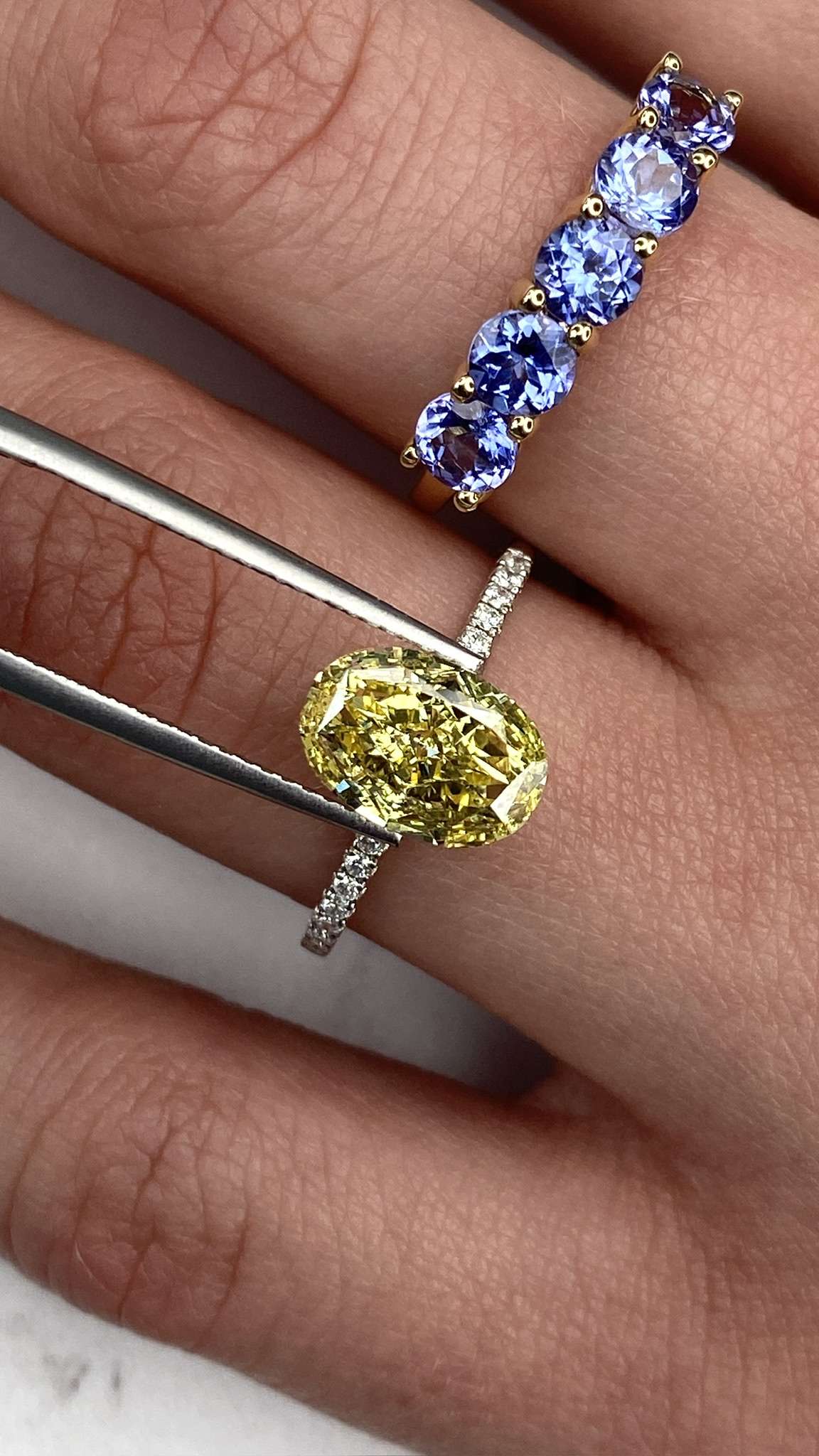
Coloured diamonds are special. According to GIA, only about one in every 10,000 carats of diamonds mined is a natural coloured diamond. Yellow is the most common of the coloured ones, making up about 60 percent of them, but that still makes a natural yellow a rare find.
Pale, bright or vivid?
Not every yellow diamond is the same shade. A diamond with just a hint of yellow is graded like a normal white diamond. Once the colour is strong enough, it’s graded as a “fancy” yellow, with names that tell you how rich the colour is:
- Fancy Light – soft and delicate
- Fancy – a clear, pretty yellow
- Fancy Intense – rich and eye-catching
- Fancy Vivid – the brightest, most sought-after yellow
Some yellows have a touch of another colour, like a hint of orange, green or brown. That isn’t a flaw. It simply gives the stone its own personality, so it’s always worth seeing it with your own eyes.
Tips for choosing your yellow diamond
Look at the colour first. With yellow diamonds, colour is the star of the show. Look at the stone in good light, and out of the setting if you can.
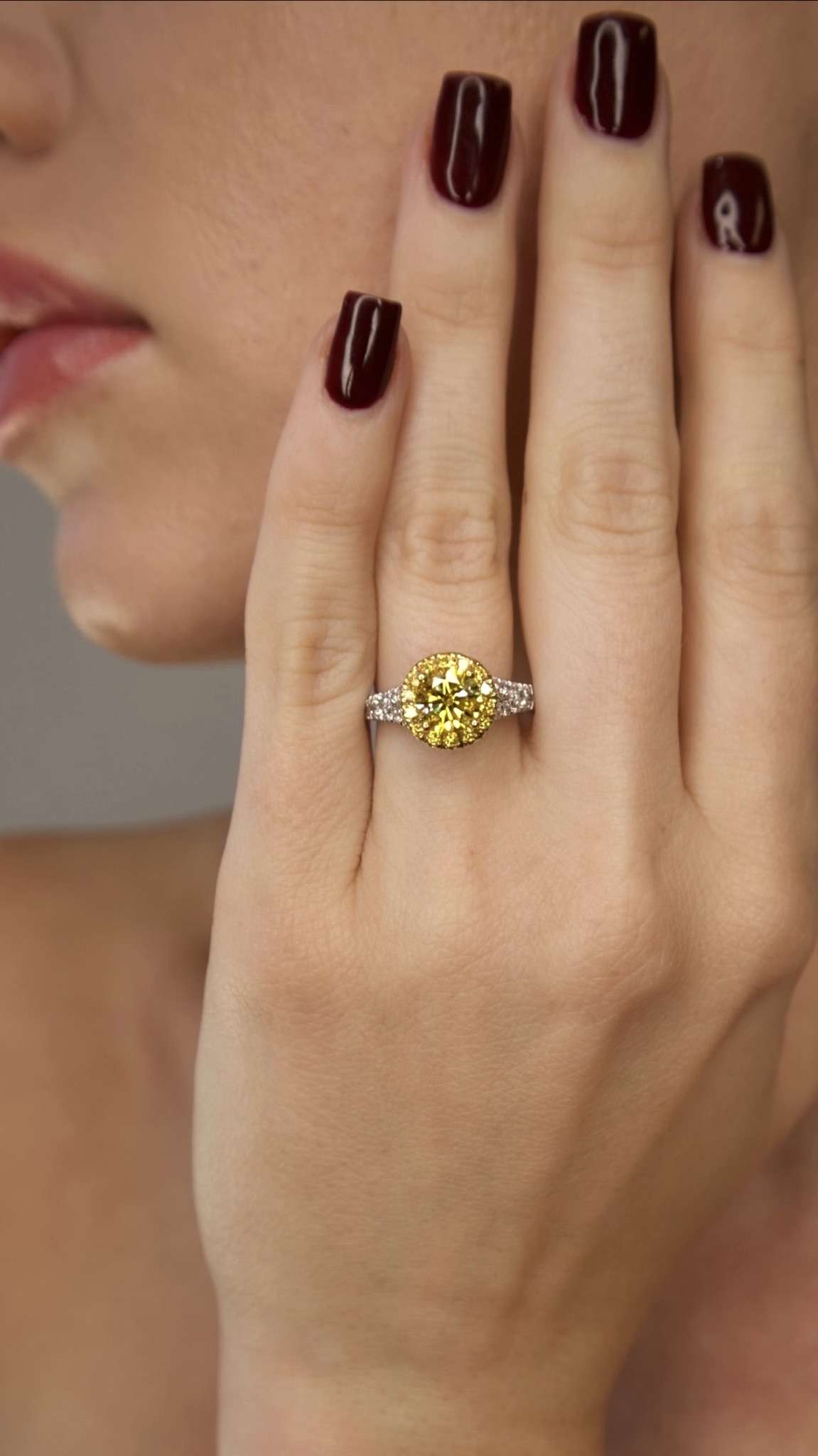
Think about the metal. Yellow gold makes a soft yellow look deeper and warmer. White gold or platinum makes a bright yellow really pop.
Pick a shape that shows off the colour. Cushion, radiant, oval, pear and emerald shapes tend to hold the yellow beautifully. Round diamonds sparkle so much that the colour can look a little lighter.
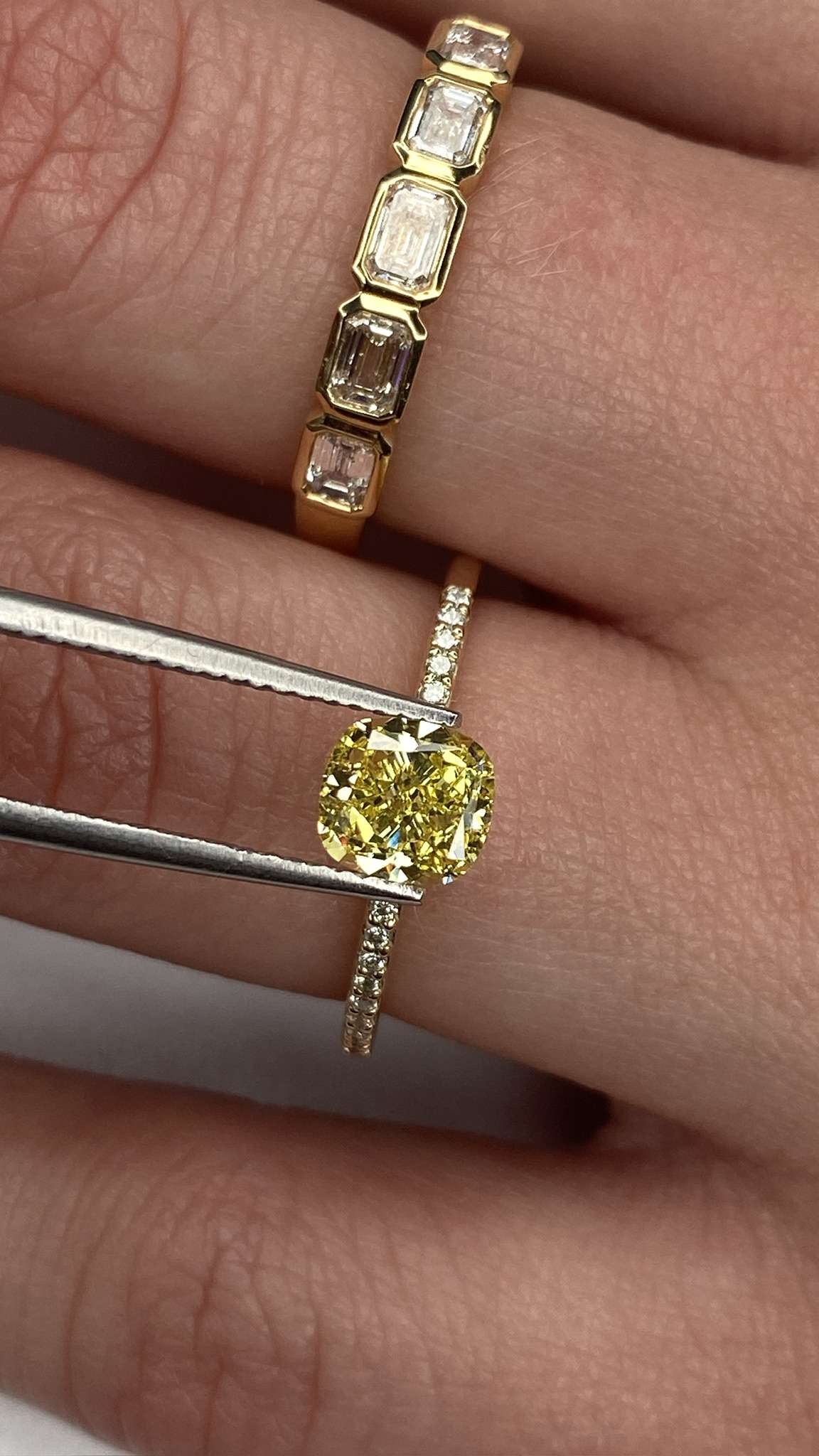
Ask for a certificate. A report from an independent lab tells you whether the diamond is natural or lab-grown, and whether the colour is natural. That way you know exactly what you’re getting.
Natural or lab-grown?
Both are real diamonds. Lab-grown yellow diamonds are made in a lab instead of deep in the earth, and they look just as beautiful. We work with both, and we’ll always tell you clearly which one you’re looking at, so you can choose what feels right for you.
Yellow diamonds at Stonz
We source loose yellow diamonds and make the jewellery right here in Pretoria, with our own goldsmiths, setters and CAD designer. If the stone you’re dreaming of isn’t in our tray, we’ll go and find it through our dealer network.
Come and see them in person. We’re in Menlyn, Pretoria, by appointment only, at Summit Place, 221 Garsfontein Road. Email rolling@stonz.diamonds or WhatsApp 082 534 5847 to book a visit or chat about a custom piece.
Next in the series: brown diamonds, then blue.
Sources
Facts in this draft were checked against the pages below (opened 16 November 2026).
- GIA 4Cs, “Yellow Diamond Buying Guide” — https://4cs.gia.edu/en-us/blog/yearning-yellow-diamonds/
- GIA, “Yellow Gemstones: Can You Identify Them?” (9 March 2020) — https://www.gia.edu/gia-news-research/yellow-gemstones-can-you-identify-them
- GIA Gems & Gemology, “Naturally Colored Yellow and Orange Gem Diamonds: The Nitrogen Factor” (Summer 2020) — https://www.gia.edu/gems-gemology/summer-2020-naturally-colored-yellow-orange-diamonds
- GIA 4Cs, “20 Years of GIA’s Colored Diamond Grading System” (21 February 2014) — https://4cs.gia.edu/en-us/blog/celebrate-20-years-colored-diamond-grading-system/
- GIA 4Cs, “How to Choose a Yellow Diamond Engagement Ring” (4 April 2018) — https://4cs.gia.edu/en-us/blog/how-to-choose-yellow-diamond-engagement-ring/
- Tiffany & Co., “The Tiffany Diamond” — https://www.tiffany.com/high-jewelry/the-tiffany-diamond.html
- Rapaport, “Explaining Diamond Color to Your Customers” (19 January 2016) — https://rapaport.com/trade/blog/the-colorful-world-of-diamonds-explaining-diamond-color-to-your-customers/
- Rapaport, “The Name Game: How Fancy Color Diamonds Are Graded” (21 October 2021) — https://rapaport.com/magazine-article/the-name-game-how-fancy-color-diamonds-are-graded/